
Sustainability is one of the fastest-growing career fields in the world. According to the World Economic Forum’s Future of Jobs Report 2025, the green transition is one of five key drivers of labour-market change through 2030, and environmental stewardship has entered the top 10 fastest-growing skills for the first time. In the same report, 47% of employers said they expect climate-change mitigation to transform their business.
The green economy does not look the same everywhere. Sustainability careers are booming in China and Europe which are the two largest green markets in the world, and they are building them in different ways. China dominates the manufacturing and deployment of clean technology. Europe leads in regulation, sustainable finance and corporate sustainability management.
Clean energy now powers a tenth of China’s economy
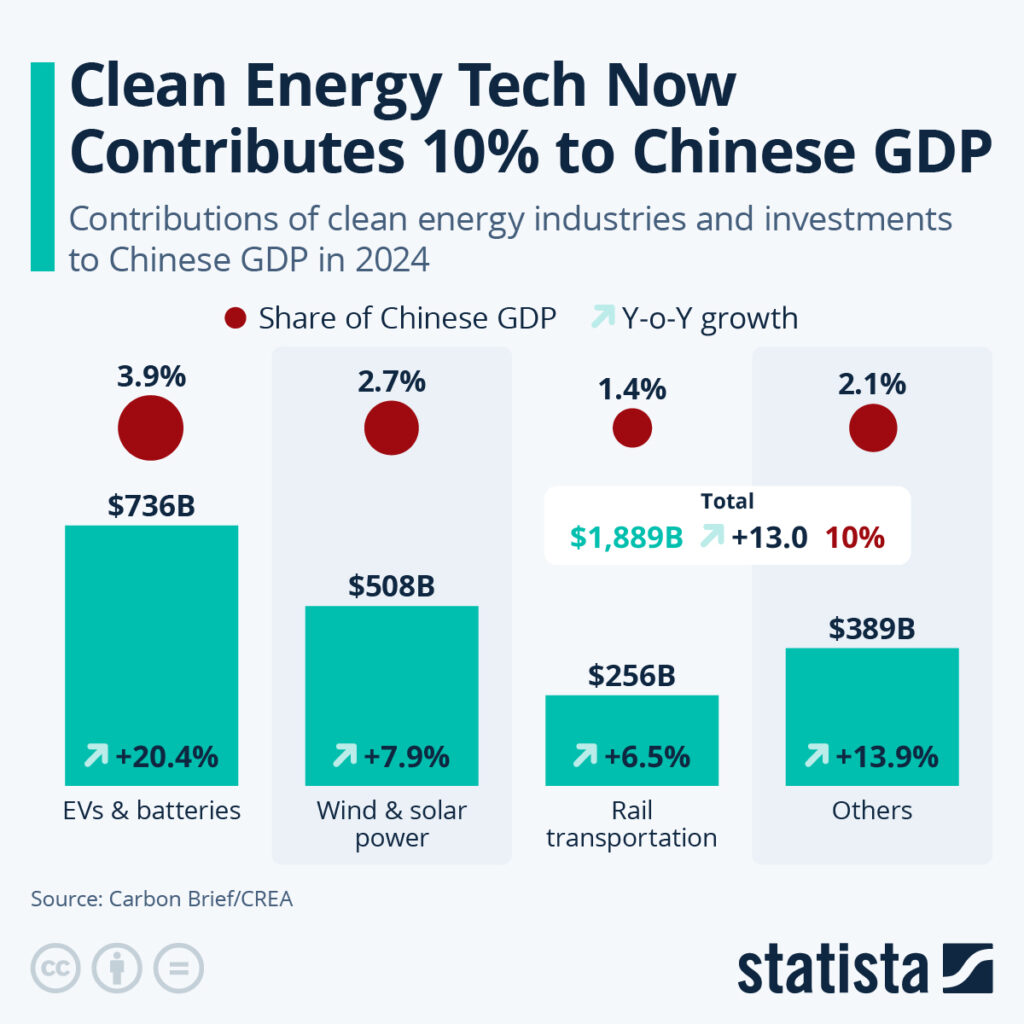
China’s green economy is now too large to treat as a niche. Clean energy sectors generated 13.6 trillion yuan ($1.9 trillion) in 2024, more than 10% of national GDP for the first time and accounting for 26% of all economic growth that year. Electric vehicles alone contributed 3.1 trillion yuan, growing 36% year on year. Total investment in clean energy reached 6.8 trillion yuan ($940 billion).
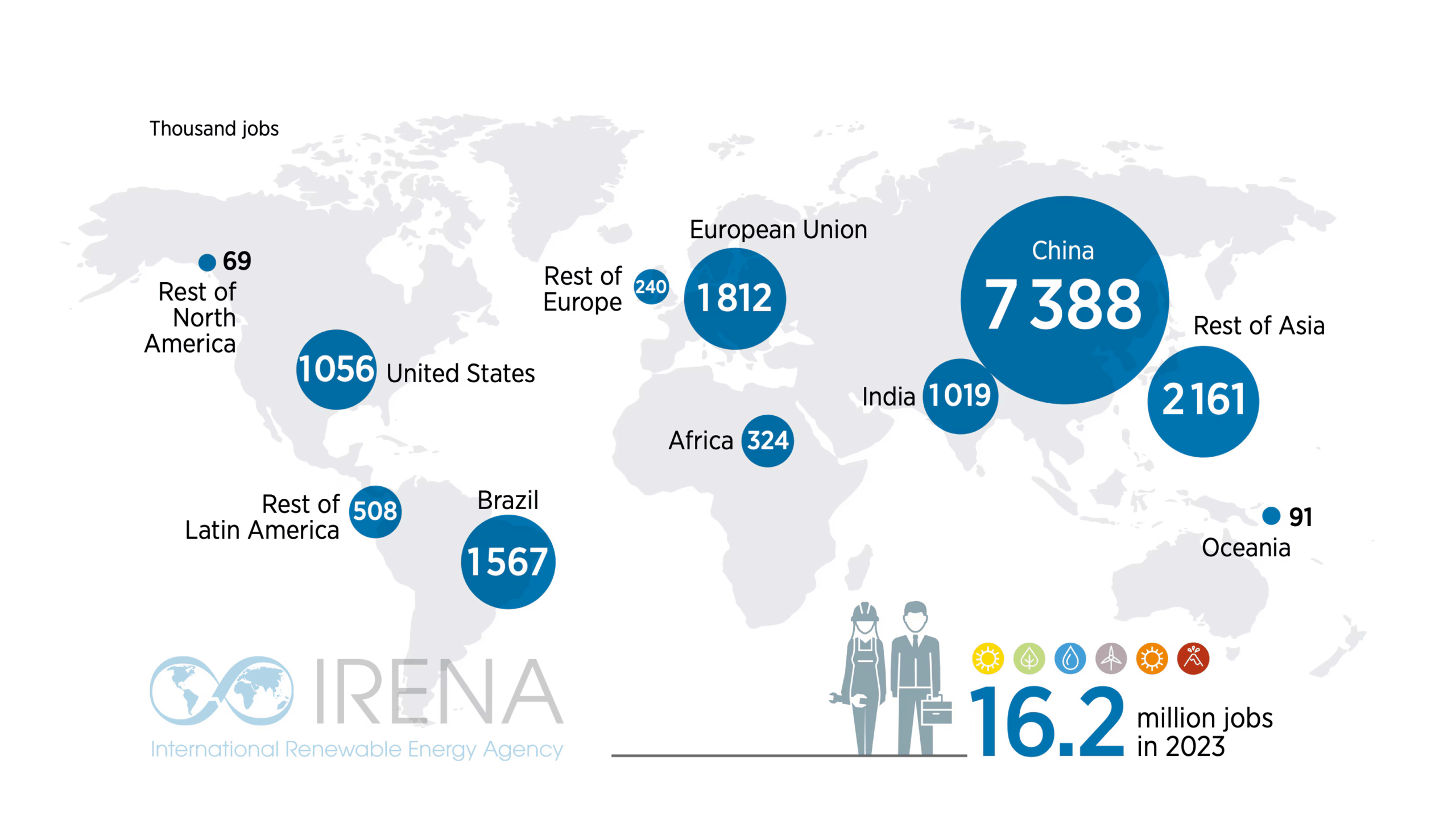
According to the IRENA and ILO Renewable Energy and Jobs Review, China accounted for 7.3 million of the world’s 16.6 million renewable energy jobs in 2024 which is 44% of the global total.
At China’s large new energy bases in desert regions, more than 70% of positions are skilled roles, and certified operation and maintenance personnel earn 15,000 to 20,000 yuan (about $2,200 to $2,900) per month. The Ministry of Human Resources and Social Security has recognized 110 new occupations since 2019 and has named the green economy as one of the sectors where it plans to foster new occupations and expand employment.
Green work in China is also merging with the country’s other big talent race: artificial intelligence. AI-related job postings grew about 12-fold year on year in early 2026, and Chinese firms are recruiting people who can apply AI to energy and manufacturing problems.
“Green skills will be the core competitive advantage for Chinese companies going global. Those who invest early will stand out,” said Wang Qian of LinkedIn China.
Demand in China concentrates in engineering, manufacturing operations, supply chain management, project deployment, and green finance, with corporate reporting growing from a much smaller base.
Regulation is building Europe’s green job market
The European Green Deal commits the EU to climate neutrality by 2050 and a 55% cut in net emissions by 2030. The Corporate Sustainability Reporting Directive requires large companies operating in the EU to report on their environmental and social impact.
That regulatory framework has created a different kind of labour market. Eurostat data shows the EU’s environmental economy employed 5.8 million full-time equivalents in 2023, up from 3.6 million in 2014. Renewable energy accounts for 1.8 million of those jobs. The rest is in areas China’s market has less of: sustainability reporting, ESG analysis, carbon accounting, sustainable finance, circular-economy consulting and environmental compliance.
In short, China’s green market hires people who build and operate technology. Europe’s green market also hires people who measure and manage sustainability in companies.
Demand for green talent is outpacing supply
Both markets share one problem, which is that demand for green talent is growing faster than supply. LinkedIn’s 2025 Climate Talent Stocktake found that 40% of workers worldwide want to work in climate and energy transition jobs, rising to 60% among Gen Z. At the same time, 30% of workers say they lack the necessary skills and nearly half report limited access to training.
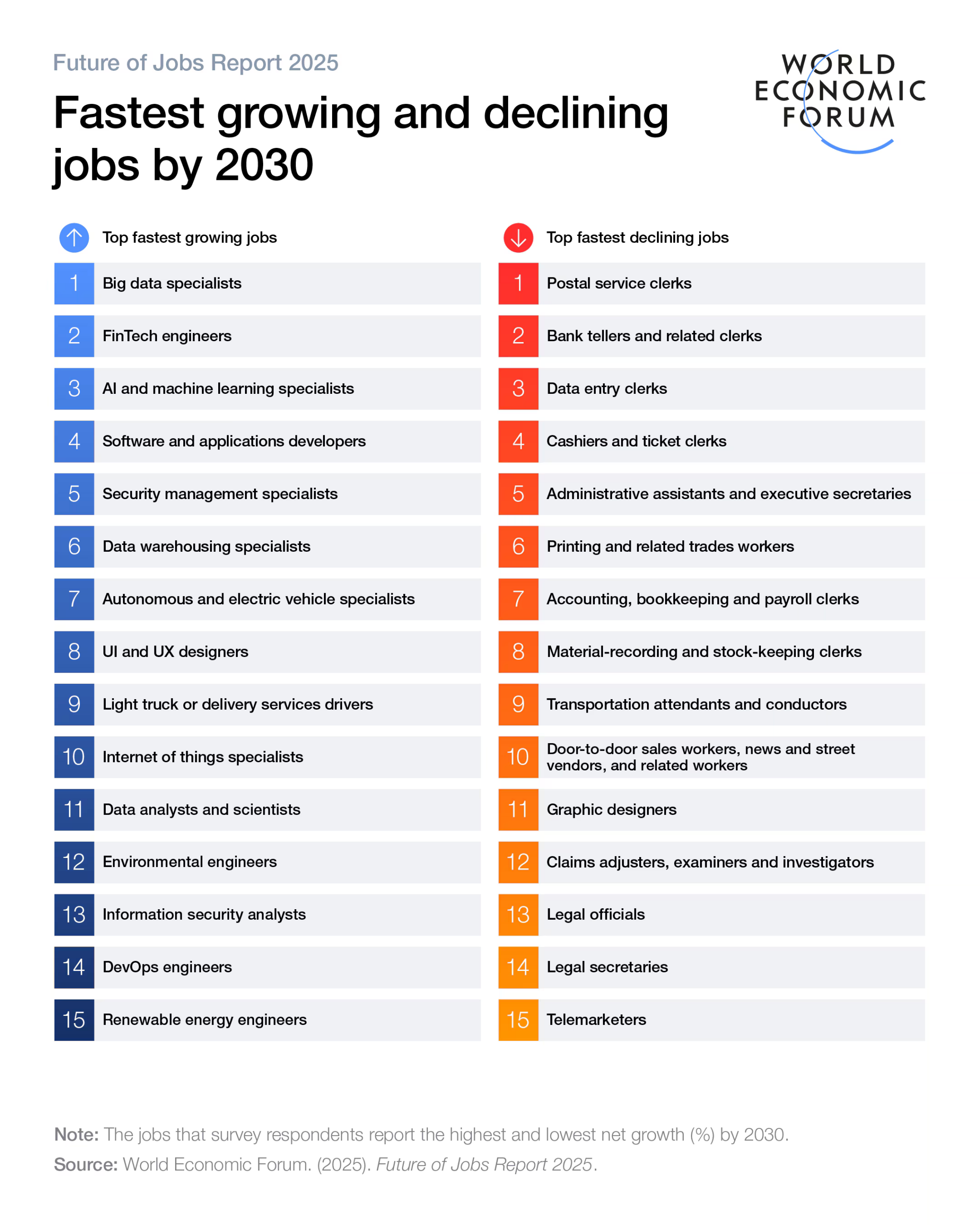
The World Economic Forum’s fastest-growing job lists reflect the same pressure, with renewable energy engineers, environmental engineers and electric vehicle specialists all ranking among the 15 fastest-growing roles to 2030.
The rise of AI has made specific green skills, particularly those related to efficiency and lifecycle management, critical for cost control and emissions reduction. There is sharply rising demand for expertise in operational efficiency, process optimization, and product life cycle management. These skills are essential for optimizing the resource-intensive nature of data centers, chip manufacturing, and the broader digital economy. As AI processing is extremely energy-intensive, the push to power data centers with renewable energy has created a need for workers who can manage green computing capacity and coordinate computing-network efficiency.
For students, this gap is the opportunity. A sustainability qualification positions you for two job markets at once: the technical, manufacturing-led market centered on China and Asia, and the management and compliance-led market centered on Europe.
How do you train for a green career?
Universities across Europe and China now offer programs designed to prepare students for sustainability careers. Most of these programs are housed in business schools or environmental science departments, where sustainability is taught alongside traditional subjects like finance, marketing, and operations.
Programs in Europe
Options in Europe range from environmental science and policy degrees at research universities to sustainability management degrees at business schools. Many programs integrate sustainability as a core component rather than treating it as a single elective.
One example is the Sustainability Management School (SUMAS) in Switzerland. Founded in 2012 in Gland, near the headquarters of IUCN and WWF, and with a second campus in Milan, SUMAS is an ACBSP-accredited business school that describes itself as the first business school built entirely around sustainability.
Programs offered are from bachelor to doctoral level, including a BBA in Sustainability Management, an MBA in Sustainability Management, and a DBA in Sustainability Management. Specializations cover sustainable finance and AI, sustainable fashion, and sustainable hospitality and tourism. Students come from more than 70 countries, and the school connects them with over 500 corporate partners for applied projects and internships.
Programs in China
Chinese universities offer engineering, energy systems, materials science, supply chain management, and business programs that is close to the companies producing solar modules, batteries, and electric vehicles. Many are taught in English and provide direct access to the manufacturing and deployment side of the green transition.
Where to begin
Chinese companies expanding overseas need managers who understand European sustainability standards, and European employers need people who understand the supply chains that run through Asia. A degree in sustainability, whether from Europe or China, can serve as a bridge between the two markets.
You can explore Sustainability programs on Global Admissions and apply online. And if you want to build your sustainability career from the China side, you can browse universities and programs on China Admissions.

- 3 Cheapest Chinese Language Programs in China for 2027 Intake - September 17, 2026
- Universities in China Offering Early-Bird Scholarships to International Students - September 13, 2026
- 5 Impressive Research Breakthroughs Happening at Westlake University - September 1, 2026