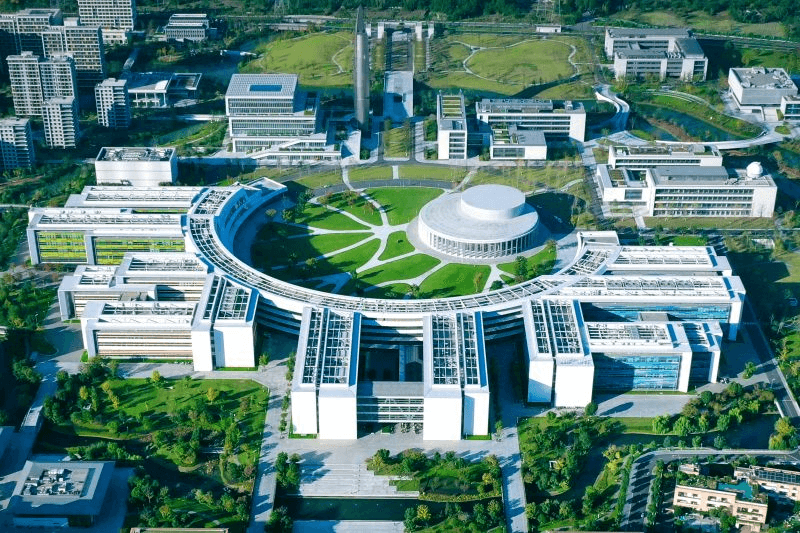
In 2018, Westlake University opened its doors in Hangzhou. Seven years later, it’s ranked among the world’s top 50 universities for artificial intelligence research and has cracked the top 400 in the Academic Ranking of World Universities (ARWU), jumping from 801-900 in 2021 to 301-400 in 2025.
The numbers tell part of the story. The Nature Index 2025 rankings put Westlake at #5 among rising young universities globally, with research output growing nearly 39% year-over-year. Papers appear regularly in Nature, Science, and Cell, journals where most established universities would celebrate a single publication.
For international students who want to pursue a PhD in science or engineering, Westlake offers a rare environment. Here, students are encouraged to create new discovery. We looked at five specific breakthroughs from Westlake University that show why it is an exciting place to build a career in science.
Global Rankings
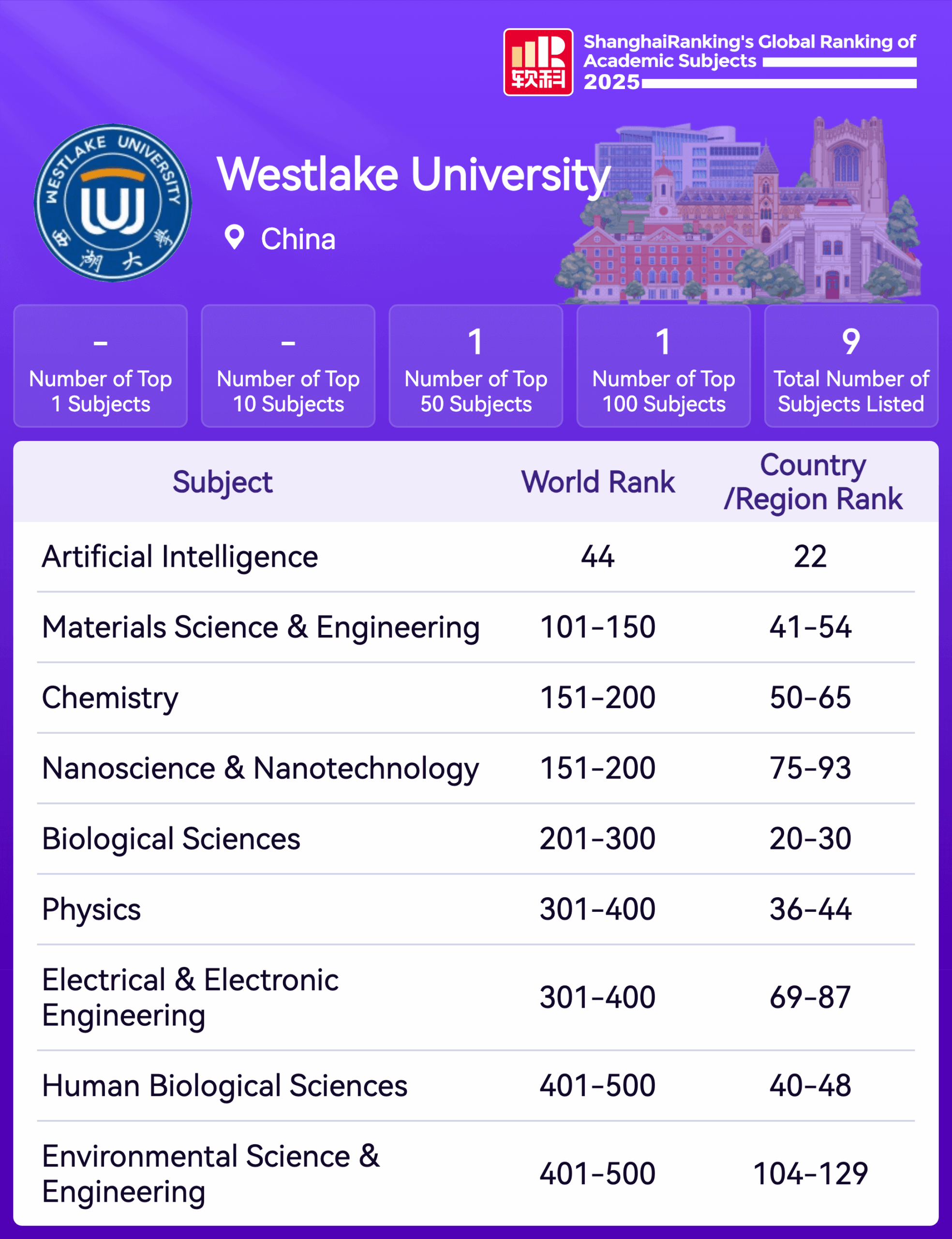
Westlake University has climbed global ranking lists very quickly. The ShanghaiRanking Global Ranking of Academic Subjects 2025 places Westlake in strong positions across major disciplines:
- Artificial Intelligence: Ranked 44 globally and 22 in China.
- Materials Science and Engineering: Ranked between 101 and 150 globally.
- Chemistry: Ranked between 151 and 200 globally.
- Biological Sciences: Ranked between 201 and 300 globally.
1) “I Touch; Therefore, I Am”: Feeling Virtual Reality
Virtual Reality (VR) usually engages only your eyes and ears. Researchers at Westlake wanted to include the sense of touch. They created a new panel device using origami structures that provides active physical feedback. This allows users to actually feel the shape and stiffness of virtual objects, bridging the gap between the digital and physical worlds.
- The Researchers: Led by Prof. Hanqing Jiang and team.
- The School: School of Engineering
Learn more about the research here.
2) Drones Swapping Tools in the Air
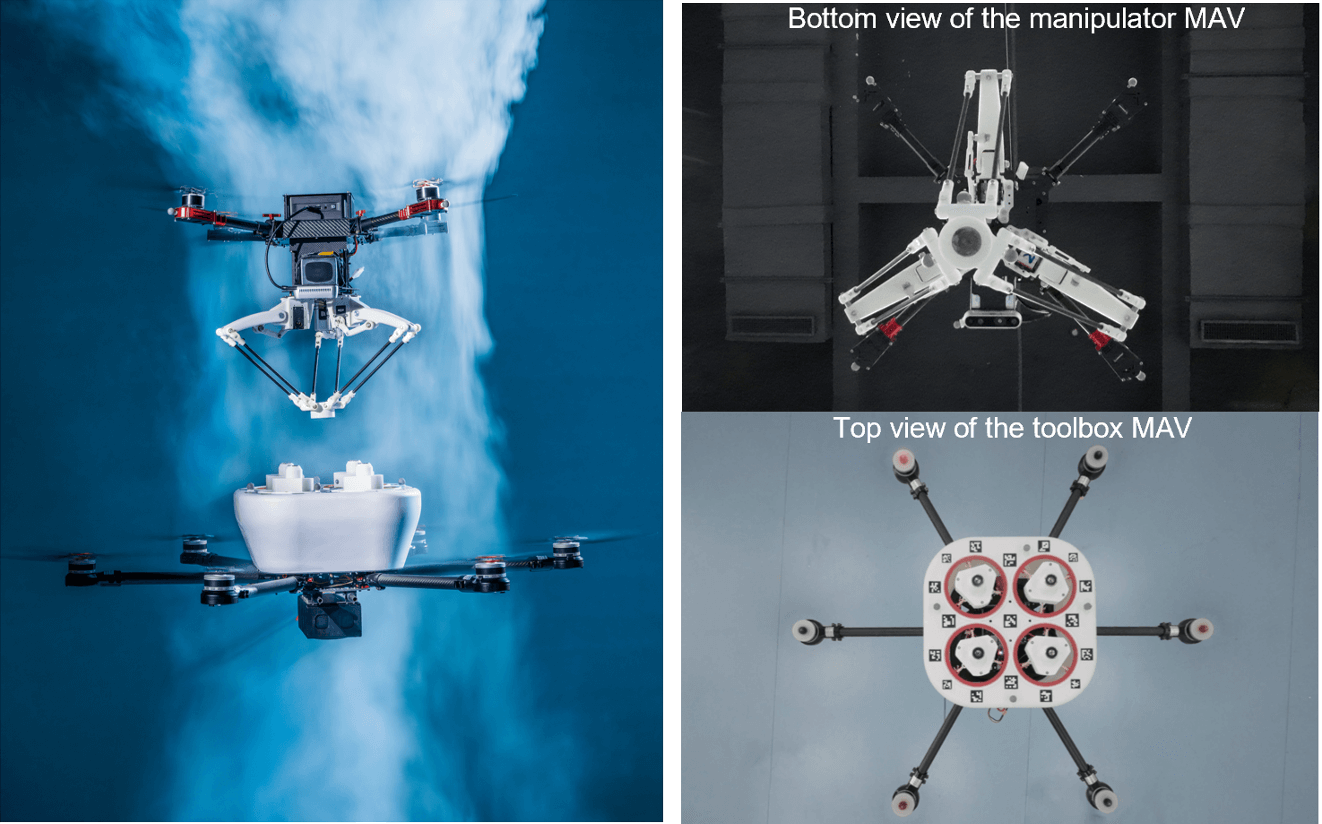
Efficiency is vital in robotics. Usually, a drone must land to change a tool or sensor. The Westlake team developed a system called “FlyingToolbox” that allows drones to exchange equipment while hovering in the air. They use visual tracking and magnets to swap tools without touching the ground, which is a major step forward for automated industries and rescue missions.
- The Researchers: Led by Prof. Shiyu Zhao, Dr. Huazi Cao, and team.
- The School: School of Engineering
Learn more about the research here.
3) Mapping the “Black Box” of Biology
Spliceosomes are cellular machines that edit RNA to produce proteins. While major spliceosomes are common, the “minor spliceosome” is rare and notoriously difficult to study. Westlake researchers are the only team in the world to successfully map its 3D atomic structure. They identified seven new proteins and revealed the unique mechanisms this complex uses to recognize genetic sequences, distinguishing it from the major spliceosome.
- The Researchers: Led by Prof. Yigong Shi and Prof. Ruixue Wan.
- The School: School of Life Sciences
Learn more about the research here.
4) How Bacteria Help Cancer Spread
Cancer research is a primary focus at Westlake. A study found that bacteria living inside tumor cells can actually help cancer metastasize, or spread to other parts of the body. These bacteria help cancer cells survive the mechanical stress of traveling through the bloodstream. This discovery suggests that using antibiotics to target these bacteria could be a new way to treat cancer.
- The Researchers: Led by Prof. Shang Cai and team.
- The School: School of Life Sciences
Learn more about the research here.
5) Changing How We Understand Batteries
Batteries are essential for a sustainable future. Researchers at Westlake discovered that the protective layer in lithium batteries (the SEI) uses a mixture of components, known as a solid solution, rather than pure layers as previously thought. This mixture allows charged ions to move much faster. This finding opens new paths for designing batteries that are safer and charge more quickly.
- The Researchers: Led by Prof. Yuxuan Xiang and Prof. Yizhou Zhu.
- The School: School of Engineering
Learn more about the research here.
Apply for a PhD at Westlake

Westlake University invites you to join this community of innovators. The university is currently accepting applications for its fully funded PhD programs. International students who hold a bachelor degree can apply directly to the doctoral stream in most majors.
Available PhD Programs include:
- Biology
- Chemistry
- Physics
- Mathematics
- Electronic Science and Technology
- Materials Science and Engineering
- Information Technology in Artificial Intelligence
- Sustainability Science and Technology
- Quantitative Biology and Complex Systems
Admissions Benefits:
- Full Tuition Waiver for all admitted students.
- Monthly Living Stipend to cover accommodation and daily costs.
- Advanced Facilities: Access to elite labs and research centers.
Start Your Journey
The world needs new scientists and engineers. Learn more and apply for Westlake’s programs through the China Admissions platform.
Continue reading:
- Why China’s Westlake University is the Best Place to Study STEM
- Summer Research Internship Opportunity in China: Westlake University Now Accepting Applications for the 2026 Summer Research Internship

- 3 Cheapest Chinese Language Programs in China for 2027 Intake - September 17, 2026
- Universities in China Offering Early-Bird Scholarships to International Students - September 13, 2026
- 5 Impressive Research Breakthroughs Happening at Westlake University - September 1, 2026