
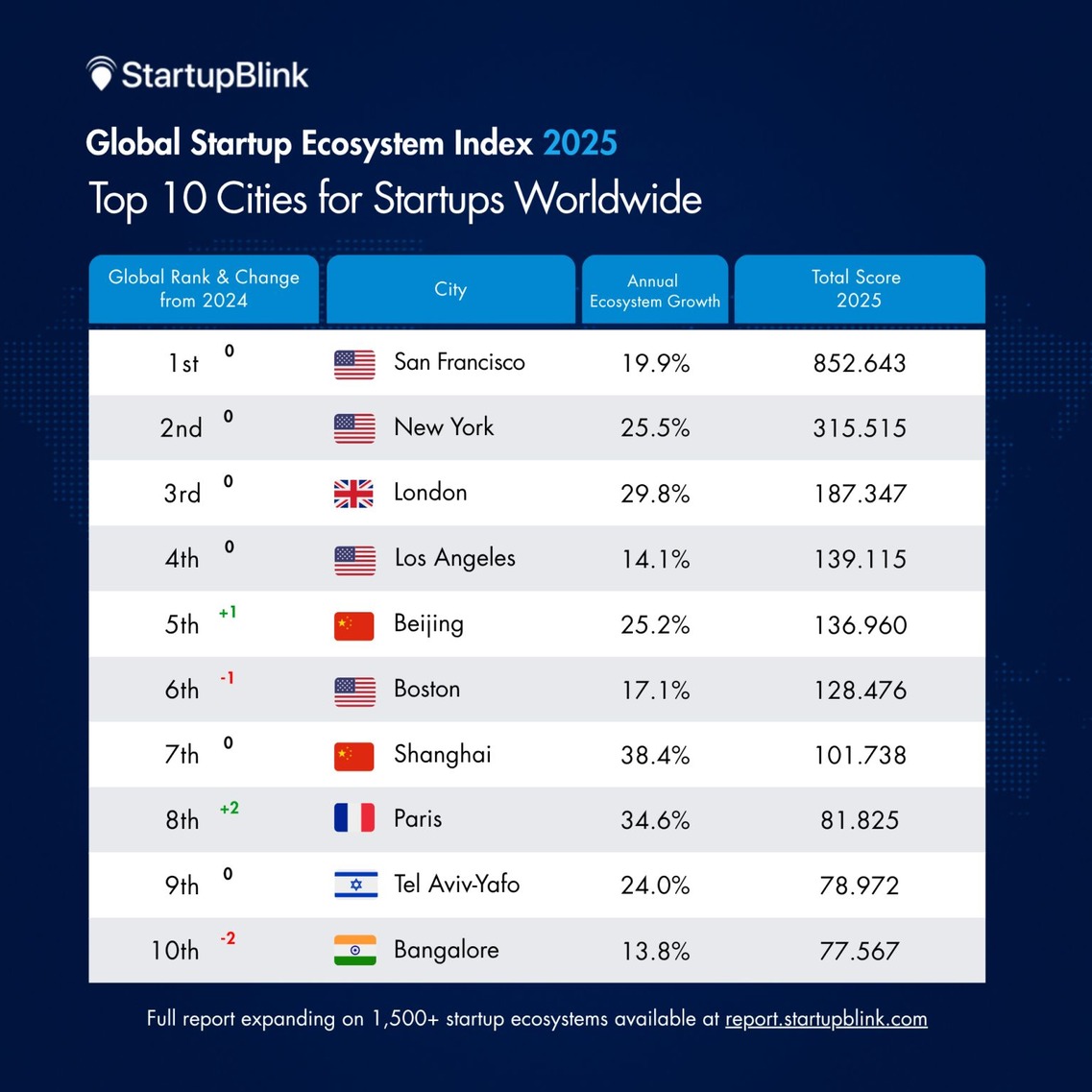
China has ambitious long term plans – to become the world’s primary AI innovation center and a 10 trillion RMB industry by 2030. Beijing ranks #5 globally for innovation, and ranks first in China for startups (63 unicorns) and AI (2,500+ firms).
Here’s why more and more leading global talent are choosing to study business in China.
Why Beijing’s Tech Scene Matters for Business Students
Beijing Ranks #5 Globally in Innovation Power
Beijing ranks #5 worldwide and #1 in Asia for innovation according StartupBlink’s 2025 data, showing 25.2% growth. The city also holds the #1 position in the Nature Index’s Science Cities ranking, a position it has maintained for nine consecutive years.
What does this mean for you as a business student? Beijing’s startup ecosystem grew 25.2% in 2025, the fastest in Asia. You study where billion-dollar companies launch and scale at a pace unmatched elsewhere in the region.
Beijing’s 63 Unicorns
Beijing leads all Chinese cities with 63 unicorn companies (privately-held startups valued over $1 billion). Shanghai follows with 42 unicorns. Hangzhou has 19.
These companies operate across AI, fintech, e-commerce, autonomous vehicles, robotics, and biotech. As a business student in Beijing, you get direct access to many of them through company visits and field trips built into your program.
Leading AI Innovation Hub
Beijing leads all Chinese cities in AI development. The city is home to over 2,500 AI companies and has registered 183 large AI models, the highest number nationwide.
Leading Beijing-based AI companies include Baidu (Ernie), ByteDance (Doubao), Zhipu AI (GLM), and Moonshot AI (Kimi). These commercial models perform on par with leading international standards.
This concentration means you witness AI development firsthand. You see how these technologies transform finance, retail, manufacturing, and healthcare in real time.
China’s Silicon Valley
Zhongguancun Science Park (Z-Park) covers 488 square kilometers in Beijing. The park houses tech giants including Baidu, Tencent, Lenovo, ByteDance (TikTok), Xiaomi, and JD.com.
The area has become known as “China’s Silicon Valley” for good reason. More than 20,000 enterprises operate in the park’s technology ecosystem, forming complete industrial chains from research to production to market.
Walk through Zhongguancun and you see the entire startup lifecycle. Early-stage companies occupy incubator spaces. Mid-stage startups fill modern offices. Tech giants anchor massive campuses. This geography teaches business lessons no textbook provides.

Beijing’s AI Industry Reaches $64.6 Billion
Beijing is home to over 2,500 AI companies with a total industry scale of 450 billion yuan (about $64.6 billion) in 2025. The core AI sector grew 25.3% year-on-year.
Leading companies include MEGVII ($4 billion valuation), Zhipu AI ($4.3 billion), and Moonshot AI ($18 billion). These companies launched recently and scaled quickly. Moonshot AI, founded in 2023, secured major funding rounds and launched Kimi within its first two years. Zhipu AI went from university research project in 2019 to a public company in early 2026.
This rapid scaling shows you what fast-growth business models look like in practice.
How This Changes Your Business Education
Visit Real Tech Companies Up Close
RMBS builds company visits and internships right into your Global BBA. Beijing’s tech scene gives you unmatched access. The city hosts headquarters for major tech firms, thousands of startups, venture capital offices, and innovation labs. Very few cities worldwide offer this concentration of business learning opportunities.
Network With Founders and Investors
Beijing attracts entrepreneurs from across China and globally. The city’s tech ecosystem draws talent from top universities, international companies, and research institutions.
Venture capital firms actively scout Beijing for investment opportunities. Sequoia Capital China, Tencent Holdings, IDG Capital, and dozens of other major investors maintain strong presence here.
As a business student in Beijing, you attend tech conferences, startup pitch events, and industry summits.
Understand Chinese Business Models
Chinese tech companies operate differently than Western firms. They move faster, scale bigger, and integrate technologies in unique ways.
Beijing gives you direct observation of these models. You see how companies like ByteDance built TikTok into a global platform.
This knowledge makes you more valuable to global companies. Employers want people who understand both Western and Chinese business approaches.
You Can See Policy Impact on Innovation
China’s government plays an active role in technology development. The 15th Five-Year Plan (2026-2030) prioritizes technological self-reliance and innovation as national objectives.
Beijing serves as the testing ground for many policies. You observe how government support shapes startup funding, how regulations affect tech companies, and how public-private partnerships drive innovation.
This policy-business relationship differs from Western markets. Understanding it gives you insights into how the world’s second-largest economy operates.
Where Should You study?
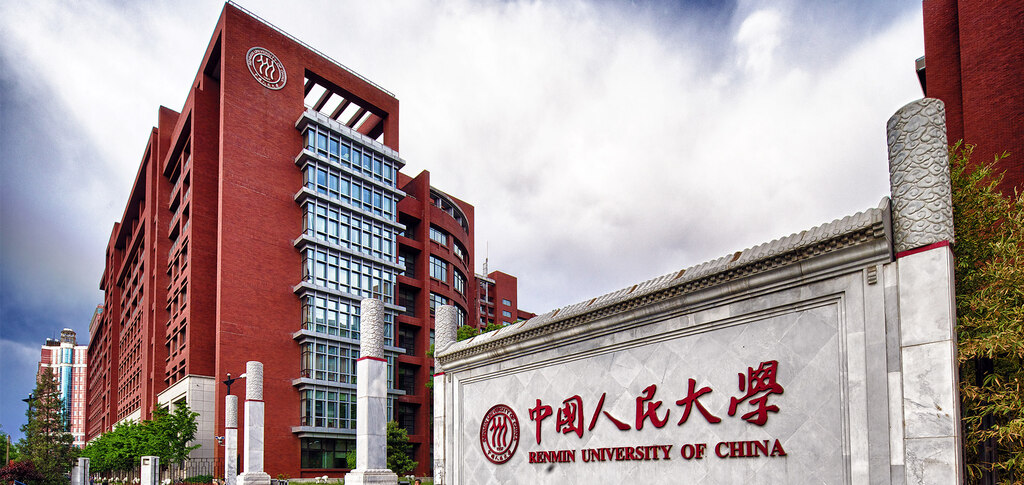
One of the top business schools in Beijing is Renmin Business School (Renmin University of China). Renmin Business School sits in Beijing’s Haidian District, the same area housing Zhongguancun Science Park and thousands of tech companies.
Your campus location puts you minutes from major tech firms, startup incubators, and venture capital offices. The Global BBA program maintains class sizes of 20-30 students. This small structure means you get personalized attention from professors who know the local tech ecosystem personally.
Many RMBS faculty members advise tech companies, serve on startup boards, or maintain active research partnerships with firms. They connect students with opportunities based on individual interests and career goals.
Many graduates work at tech firms including Alibaba, Tencent, Huawei, ByteDance, and international companies with Beijing operations.
What You Can Gain From This Environment
Different Business Thinking
Western business education focuses on established companies and mature markets. Beijing shows you fast-growth environments where companies scale from zero to billions in years.
This exposure changes how you think about business.
Cross-Cultural Skills
Renmin Business School hosts over 200 international students annually from countries across Asia, Europe, Africa, and the Americas. You work with students from different countries while studying in a Chinese business environment.
You can learn how to communicate across cultures, navigate different business styles, and build relationships with diverse teams.
 |
“The curriculum arranged to suit your specific needs will help you build a solid foundation in business-related knowledge that you desire to attain. Various business competitions, which are open to only a few schools (including RMBS), will be a great way to find your passion and put your business know-how into practice. There are also interactive lessons, such as company visits, that will bridge the gap between you and the real world, allowing you to take a peek at the many possible routes you could take after graduation. “ – Tanaya Sha, from Russia, Global BBA Class of 2023 |
How to Experience This Ecosystem
The Global BBA program at Renmin Business School gives you four years in Beijing’s innovation center.
You study core business disciplines (marketing, finance, accounting, economics, management) while immersed in one of the world’s most dynamic tech environments.
The program includes company visits, business competitions, internships, and a full year studying abroad at partner universities worldwide.
Annual tuition is 36,000 RMB (about $5,200 USD). Around 60% of international students receive scholarships, making this education accessible.
Applications for the 2026 intake close May 31, 2026.
Continue reading:
- 10 Reasons to Study Business at Renmin Business School
- Introducing Renmin Business School – Top Business School in China
- Renmin Business School Admissions Guide 2026
Frequently Asked Questions

- How Beijing’s Tech Ecosystem Changes Your Business Mindset - March 29, 2026
- 10 Reasons to Study Bachelor’s in Business (BBA) at Renmin Business School - March 24, 2026
- How to prepare for the CSCA Exam? With Ms Vika from ECUST - March 21, 2026